
Uzbekistan – May 2014
This, or some variation of it, has been a common response throughout Central Asia. Looking for some relief from the heat, ask a restaurant if they have air conditioning: “Yes, we have it, but it doesn’t work.” Surprised there’s no hot water in the hotel’s shower, so you call the front desk to inquire about the hot water: “Yes, we have it, but it doesn’t work.”
In Tashkent, we’re staying at the Hotel Uzbekistan, a 17-story monolith of a hotel built in a classic Soviet style. It was once a grand hotel that had fallen into some disrepair. However, renovations are underway, and our room is fortunately one of the few that have been renovated. Its reception area is still grand and full service, so I figure this will not be a phrase we come across here. I am correct, though other issues arise.
First, when I head to the hotel’s money exchange, the woman assisting me asks, “Are you sure you can spend it all? You can’t use it outside of the country.” I assure the concerned woman that I am traveling with my wife, so I’m spending for two. “But are you sure? You can’t spend it outside of the country.” I assure her again before she reluctantly hands me a large stack of bills.
It should be noted that at the time, the largest bill in circulation was the 1000 Uzbekistani so’m note, which is worth about 25 cents in US dollars. There was a new 5000 so’m note, worth $1.25, but they were rare. This meant that nearly every transaction involved stacks of bills. Suppose you’ve just exchanged $100 as I have. In that case, you end up with four hundred 1000 so’m notes, which are then divided among several envelopes and assorted hiding places. Every meal has involved at least three currency counts: one by me, one by my wife, and one by the waiter or waitress.
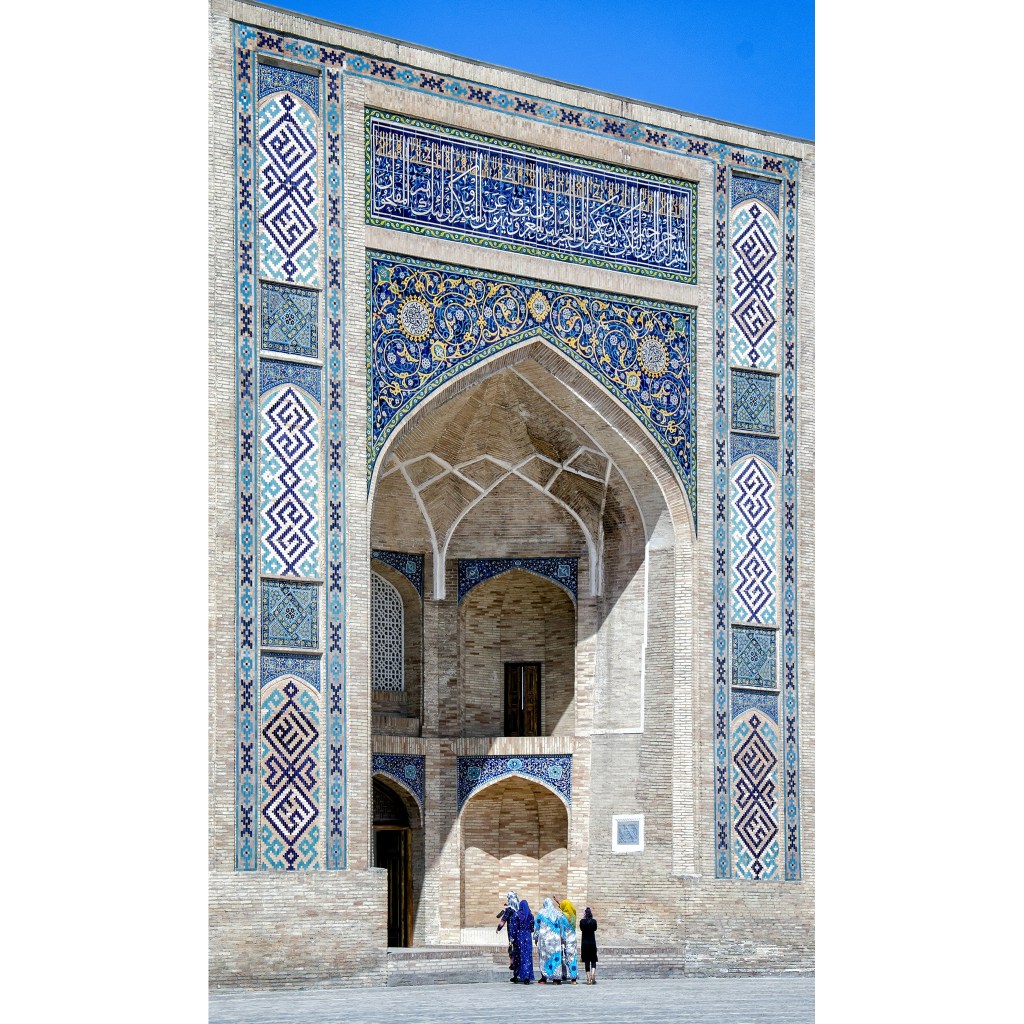
The front of the hotel is lined with taxi drivers who don’t seem to want to go anywhere. Give them a destination, and they either tell you they don’t go there or quote an extortionate price and don’t seem too upset when you turn them down. This situation is not unique to the hotel. When returning from an outing to a distant madrasa, no taxi stops for us as we try to flag one down on the street. Fortunately, a local pulls over, asks where we’re headed, and quotes a reasonable price back to our hotel.
At the airport, I point to rows of Russian “Coke” behind the shopkeeper and ask for a cola. “No cola, only tea or water,” I am told. The year before, Coca-Cola disappeared from shelves in Uzbekistan due to a scandal involving a company linked to the president’s daughter, though Russian substitutes are available.
I then head to a bar where I can grab a Pepsi and use up some remaining Uzbekistani so’m and am told: “Sorry, no so’m. Only euros or dollars.” Don’t tell the woman at the hotel I’m going to be leaving the country with a few so’m I wasn’t able to spend, or she may not give any to the next guest looking to exchange money.
This travel tale is included in my collection, Can’t Get Here from There: Fifty Tales of Travel. Buy it on Amazon.
Back to Travel Tales | Asia
 Jeremiah Gilbert Photography